You took my only love
Seemingly time will show
All the time I spent - waiting for you meant
That I only needed you so badly
Ev´ry thing you did - ev´ry word you said
Ev´ry time I saw your face I trembled

You took my only love
Seemingly time will show
All the time I spent - waiting for you meant
That I only needed you so badly

You´re closer to me now - you´re far away
You´re closer to me now
You´re closer to me now
You´re far away
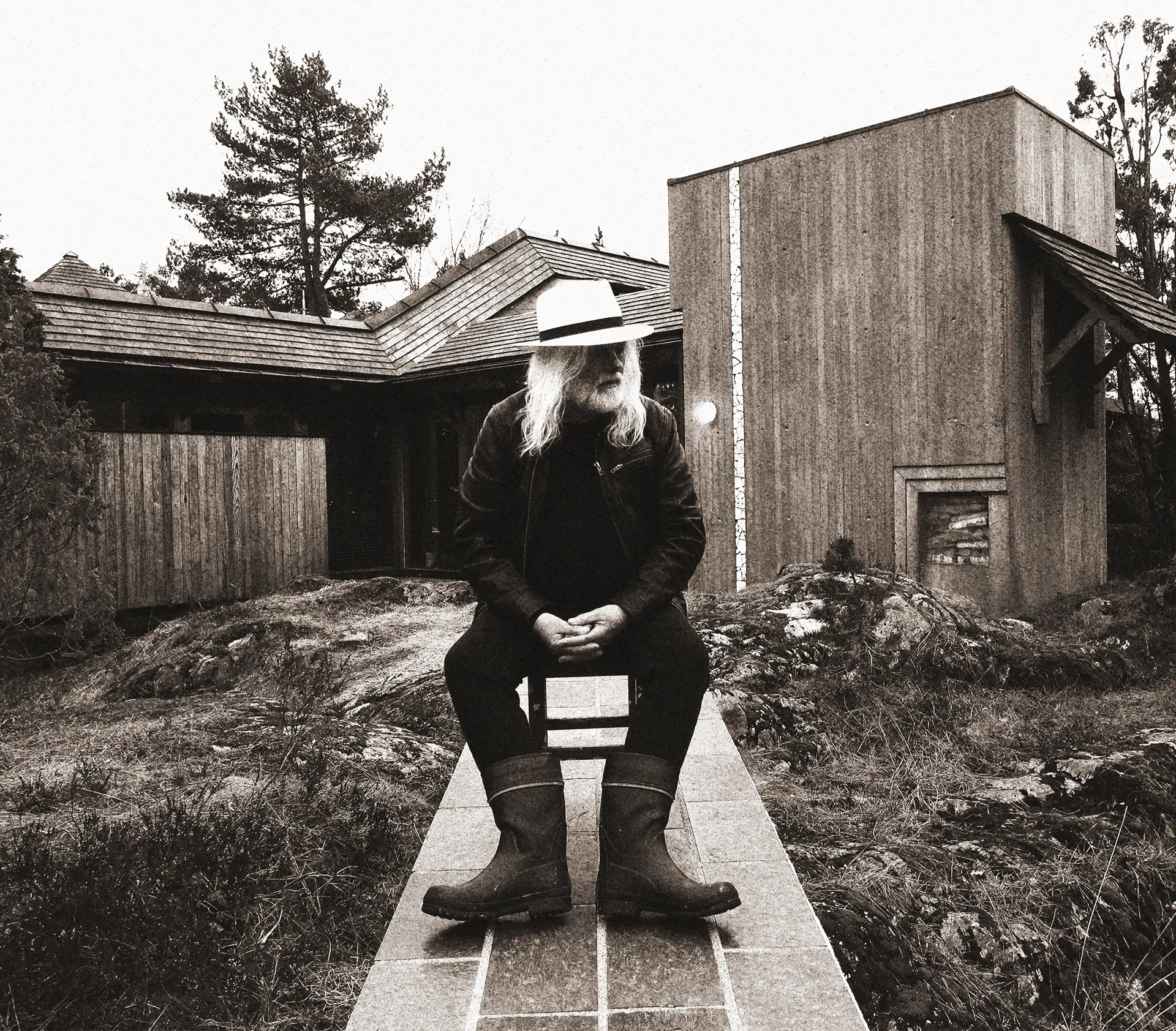
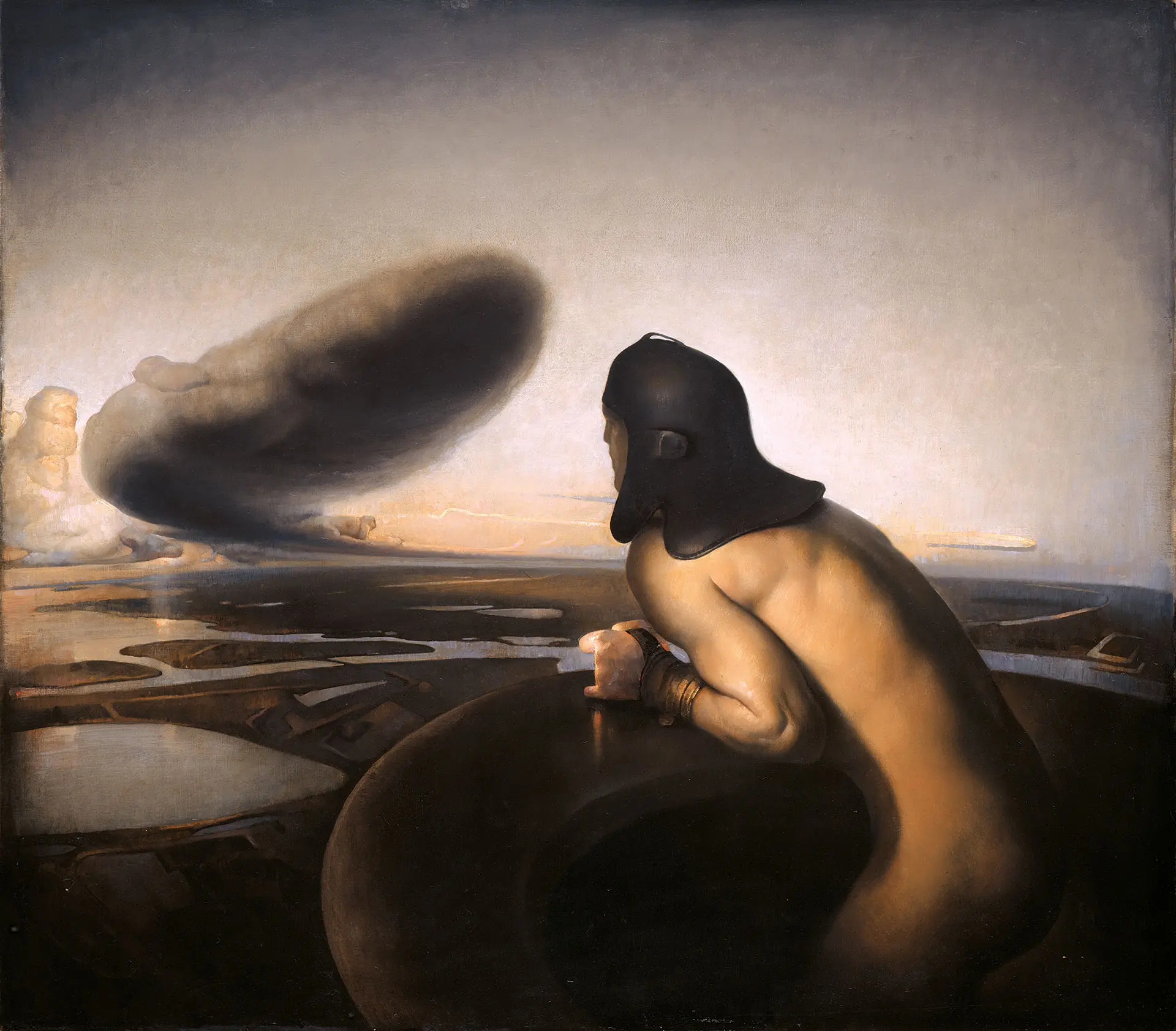
Electric Muzeum is a music project by and featuring Terje Welle Busk. The double album “electric museum at villa busk” is now available on all streaming services. CD and vinyl editions will be released in November. The cover artwork is Odd Nerdrum´s painting “The Cloud”.
Electric Muzeum er et musikkprosjekt av og med Terje Welle Busk. Dobbeltalbumet «electric muzeum at villa busk» er nå tilgjengelig på alle strømmetjenester. CD og vinyl av albumet blir utgitt i november. Omslagsbilde er Odd Nerdrums maleri «The Cloud».
The LyricsTekstene
My only love
Me and my buddy Henry
My buddy Henry was a big man standing six feet tall
He sang like Buddy Holly had Hendrix hair like Millie Small
In a Mini Cooper we drove up to the bar - Henry, he had the coolest car

Annie was our chimney sweeper - at night our pub´s bar keeper
She looked like Maddy Prior of Steeleye Span
And her boyfriend`s glasses - made him look a little like Manfred Mann

Me and my buddy Henry stumbled into dark of night
Please someone come and tell us what is left and what is right
Henry - he moved like a drunken ballerina
Me myself - faked a tango from Argentina
I need your lovin´
I need your lovin´ - I need your lovin´
I may be wrong - I may be right - sometimes unfair but true
I feel I have the right to say things I dislike to you
When I hurt your pride oh girl - forgive me don´t be blue
All the things I´m doing, girl - I do it just for you
So why you wanna leave I don´t know
Tell me girl I won´t let you go
I need your lovin´ - I need your lovin´
First time I saw you girl, my heart was runnin´ wild
We laughed, we joked - we fell in love - were feelin´ fine
And at the end of night - I said I wanna make you mine
You said that´s OK boy - you´re not the usual kind

So why you wanna leave I don´t know
Tell me girl I won´t let you go
I need your lovin´ - I need your lovin´

Love - gate of paradise - we can enter through some sacrifice
Love - like an endless sea - I felt love was meant for you and me
I need your lovin´ - I need your love
I need your lovin´ - I need your love

Your love is the fire that warms me
Your love makes my soul feel free
Your love is a song in the silence
Your love makes my world go round

I need your lovin´ - I need your love
I need your lovin´ - I need your love

Love - gate of paradise - we can enter through some sacrifice
Love like an endless sea - I felt love was meant for you and me
I need your lovin´ - I need your lovin´

These words I wrote to you in nineteensixtynine
It seems like yesterday - thank God that you´re still mine
But I still fear that you some day will leave me blue
I´ll stay forever true - I put my trust in you

So why you wanna leave I don´t know
Tell me girl I won´t let you go - I need your lovin´

I need your love - I need your love - I need your lovin´ -  I need your love
I need your love - I need your love - I need your lovin´ -  I need your love
Shine a light on me
I met her on the street last night - she was walking all alone
Read a message on her phone - then she sat down right by my side
She told me ´bout this guy she had met
While she fixed up and smoked her last cigarette
Tears in her eyes - a broken voice

Oh Lord - shine a light on me
Please Lord - I´m to blind to see
And when - in my darkest night
Give me strength to fight - shine a light on me

He held her in his power - made her weak
He did hurt her feelings - mind games hide and seek
And then he left her with a smile
She felt it was the shadow of a dream
Now there´s no fields to walk - no hills to climb
She´s all alone can´t ease her pain

Oh Lord - shine a light on me
Please Lord - I´m to blind to see
And when - in my darkest night
Give me strength to fight - shine a light on me

Oh Lord - shine a light on me
Please Lord - I´m to blind to see
And when - in my darkest night
Give me strength to fight - shine a light on me
Everyday man
Hey you listen I´m an everyday man
I´m in love with my everyday girl
Ev´ry day we fight to make ends meet
Ev´ryday moments make life complete

We don´t care what the others think
We just want to embrace simple things
Don´t need no fancy cars or diamonds to impress
We don´t need to be ranked the best

We will not make the headlines
We will not walk red carpet line
Facing everyday problems
We´re doing the best we can

There's a leak in the roof - and the car's acting strange
But I´ll fix it - bad parts I can change
I am the king of DIY I like to think
But my projects end in the sink
I´ve got bills to pay - deadlines to meet
And a neighbor’s dog that won't stop its beat
I'm stuck in traffic, like every other day
But I keep my cool - that´s the everyday way

We will not make the headlines
We will not walk red carpet line
Facing everyday problems
We´re doing the best we can
We will not make the headlines
We will not walk red carpet line
Facing everyday problems
We´re doing the best we can
Childhood dreams
Take my good advice
The old man sat by his window pane - he knew how I felt
I was all alone
My only guide was some thoughts I kept - deep down inside
To fulfil my childhood dreams

I was lost in confusion
I didn´t know all my dreams and hopes - were castles of sand
So many days I wasted
So many sleepless nights I spent alone - crying in vain
Will morning come out of night

I was walking through an endless fire but I felt no heat
The distant thunder that I heard was my own heart beat
I felt I was drowning in a mist of red
I tried to understand what was wrong in my head
And the silence screamed loud in my brain

I wrote some lines in the sand
A roaring tide left me blind
How could life turn this way
I felt things were right - then all went out of sight
It all went out of sight

I wrote some lines on the ice
Please rising sun hide my lies
Then in the end I learned
To cure my disease - in silence made my peace
I finally found release

I wrote some lines in the sky
And people came and asked me why
But I will never tell the secret of mine
The one I hoped to find
And finally found
I finally found, then I was homeward bound

Take my good advice
The old man sat by his window pane - long time ago
Now I´m the old man
I´m sittin´ by my window pane - tears in my eyes
Please follow your childhood dreams
Never would make it
You said I never would make it - I took you by surprise
Eight days a week I was fighting - fighting to make ends meet
I was working all day - I was sleepless at night
I was - down on my knees

Most of the time short of money - drowning in bills to pay
God only knows how I made it - somehow I found my way
I was working all day - I was sleepless at night
I was - down on my knees

Where were you when I needed someone
Someone to back me up
Who said this is fine - so fine - so fine
You turned your back on me and you just walked away
Those days I felt it all was so sad - so sad - so sad

I knew you never would take it - that was no big surprise
Against all odds I did make it - no prisoner in disguise
No more working all day - never sleepless at night
No longer down on my knees

Where were you when I needed someone
Someone to back me up
Who said this is fine - so fine - so fine
You turned your back on me and you just walked away
Those days I felt it all was so sad - so sad - so sad
We used to walk the city streets alone
We used to walk the city streets alone
We tried to find a way that was our own
When other people spoke - about their dreams and hopes - we turned away

Our vision was a world of love and peace
In many ways we felt like refugees
We left it all behind - and hoped that we could find - some peace of mind
Our dreams were all for nothing
We fooled ourselves and closed our eyes in ninetysixtynine - sixtynine

The play with fire ended like doomsday
So many friends we lost along the way
Went down into the deep - no cinderella´s sleep - can bring them back

You´ll stay with us forever - but sad to say
Too late we read the writing on the wall
It was last call
Look for someone you can give your love
Look for someone you can give your love
Look for someone who needs you
Look for someone to tell troubles to
Look for someone to guide you

Like a shadow I was waiting for the sun
Your love surrounds me - I feel life has just begun

I´ve found someone I can give my love
I´ve found someone who needs me
I´ve found someone to tell troubles to
I´ve found someone who guides me

Like a shadow I was waiting for the sun
Your love surrounds me - I feel life has just begun

Look for someone you can give your love
Look for someone who needs you
Look for someone to tell troubles to
Look for someone to guide you

Like a shadow I was waiting for the sun
Your love surrounds me - I feel life has just begun

Love your one - Yeah love your one
Love your one - Yeah love your one

Look for someone you can give your love
Look for someone who needs you
Look for someone to tell troubles to
Look for someone to guide you
Why did nobody tell me
We buddies had a fifties beetle
She was like no other vehicle
Was our second home on wheels
Friday night - high expectations
As we headed for locations
Where we knew the birds would stay

Why did nobody tell me - there was someone like you
We ended up friends and lovers - feels like we always knew

Spirits high windows rolled down
As we cruised into down town
Playing tapes loud was our bait
We wanted the girls attention
We put on Fairport Convention
That used to do the trick

Why did nobody tell me
There was someone like you
We ended up friends and lovers
Feels like we always knew

I spent some time with lovely Rita
Can I have another Marguerita
Tired of guiding her back home
She was really good at kissin´
But I felt a lot was missin´
And my mom would be mad

Why did nobody tell me
There was someone like you
We ended up friends and lovers
Feels like we always knew

Why did nobody tell me
There was someone like you
We ended up friends and lovers
Feels like we always knew
Lullabye
Instrumental
Dreaming of claiming the sky
Fifty years in prison - now that´s how I feel
So don´t get me wrong boy - my story is real
I woke up in the dead of night - I was in an endless fight
I was trapped within myself - all my dreams were left on a shelf

The weight of expectations - I felt day and night
And all the silly bankers - put chains on my flight
Hey mister - stand grounded - now you´re flying too high
Had to tear down some walls - that required some balls I recall

Fifty years of silence - is echoing inside
And no one saw the fire - that was burning so bright
And though I was held back - my dreams didn´t die
Like a bird in a cage I was dreaming of claiming the sky

There´s a million ways of livin´ - in the end one way to die
When truth makes you conceding - it´s too late to wonder why
I´m sworn to no master - of no sect I am
To hope there is no pain - is to live your life in vain
Love is forever
Love is forever - love is forever

When I was a young boy - the future seemed so bright
When I was a young boy - my mother taught me wrong from right

Love is forever - love is forever

When I met the bad boys - I tried to hold my morals tight
When I met the bad boys - my father told me don´t you fight

Love is forever - love is forever

When I met the big boys - I learned that nothing is divine
When I met the big boys - I saw the cracks beneath the shine

Love is forever - love is forever
Love is forever - love is forever
Love is forever - love is forever
One big beautiful war
Instrumental
Nothing for me here
Life is like a wheel - a wasted wheel of fortune
We live our lives where nothing is - but all things seem
What is our common disease - we cannot tell
The state of mankind - can´t be saved by the bell

Farewell light - you sunshine bright
There´s nothing for me here - I find nothing for me here

It´s not in our power - to love or hate
It seems the will in us - is overruled by fate
The past is beyond - the reach of modification
We need the other half - of the apple of creation

Farewell light you sunshine bright
There´s nothing for me here - I find nothing for me here

Influence sellers - fortune tellers
Money in sweet eyes - buy my new lies
Plastic fantastic super dolls
Showing off - dating cokestained boys
I´ve had enough - it´s nothing but a bluff
There`s nothing for me here - I find nothing for me here

It grieves my heart to see - what man has made of man
The power of the darkness - seems to be the strongest hand
Ev´ry child knows that one - and one - and one - is three
The mighty man says it`s fake news from NBC

Farewell light you sunshine bright……
“The Story of Terje Welle Busk, Busk Lydstudio and Electric Muzeum”
Electric Muzeum is a music project by and with Terje Welle Busk. Terje Welle Busk was one of the most successful producers in Norway in the 1980s and 1990s, with close to 2.5 million MC/CD units sold. Not bad, considering Norway in 1990 had only 4.2 million inhabitants. Welle Busk handled all marketing and distribution of his recordings himself.
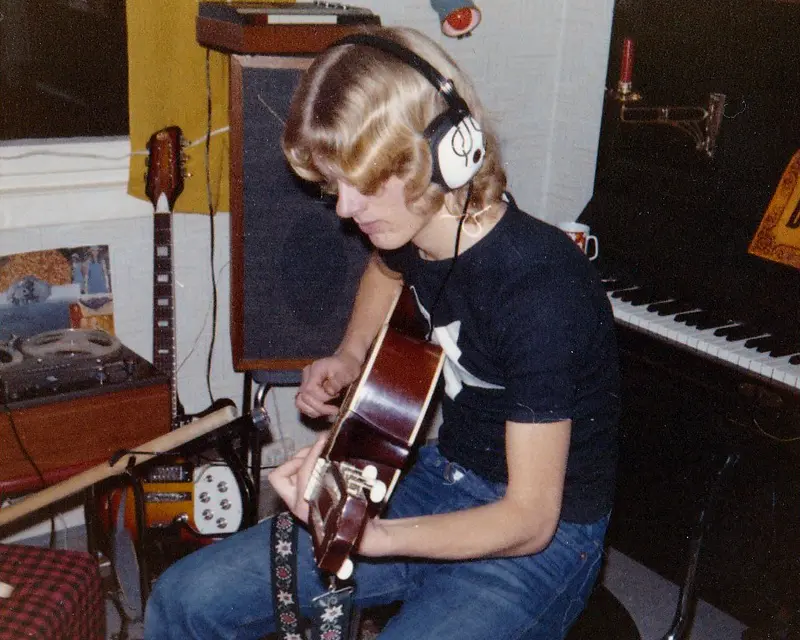
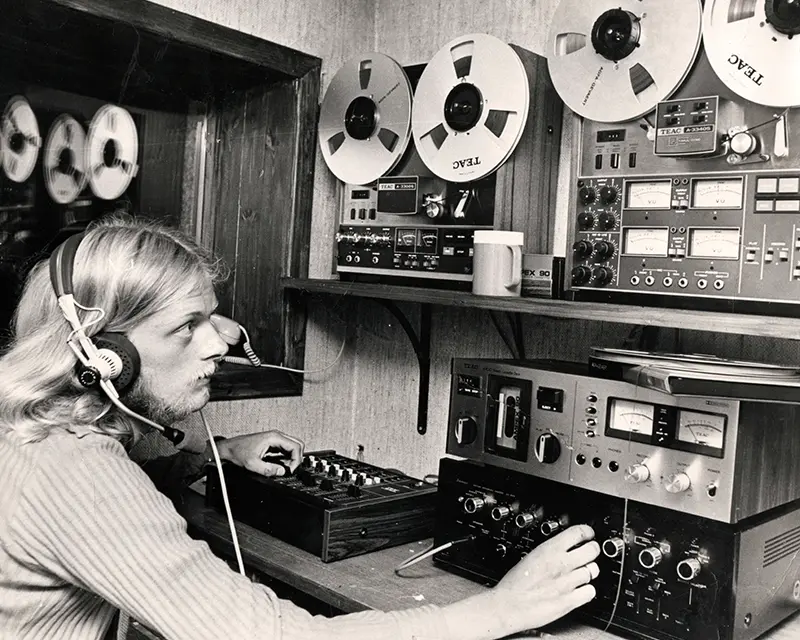
In 1966, at the age of 14, Welle Busk bought Revolver, and the world was never the same again. In his first local pop band, they played songs by the idols of the time: The Beatles, Rolling Stones, The Who, Small Faces, Tremeloes, Kinks and many others. Inspired by The Beatles’ studio experimentation, Welle Busk dreamed of having his own studio where he could work on his own compositions.
In the mid-1970s he started one of Norway’s first “basement studios” with a 4-track TEAC A 3340. Shortly after, a Soundcraft 16-8 mixer and TASCAM 80-8 were installed, followed by a TASCAM 90-16. Since Welle Busk operated the only studio between Oslo and Kristiansand, recordings were made of everything from folk music and gospel choirs to heavy punk bands.
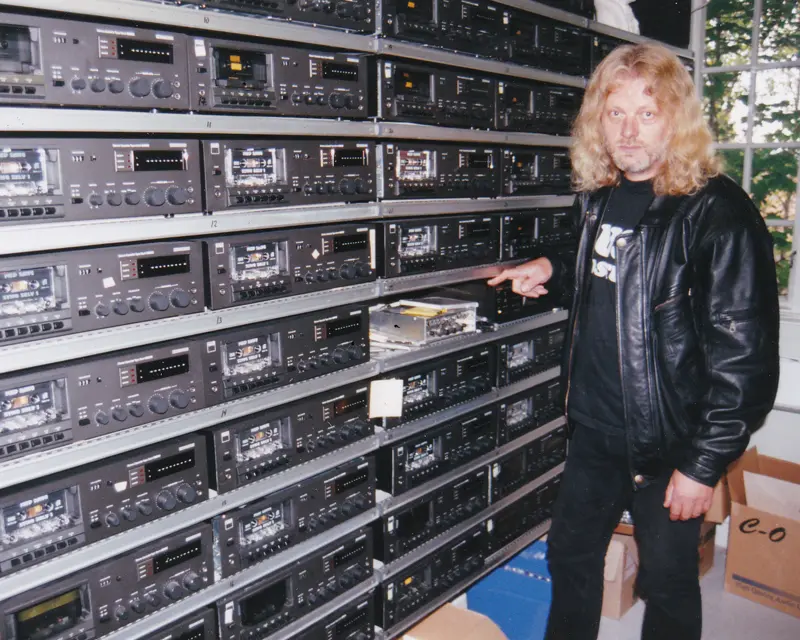
Welle Busk developed his own original method of cassette duplication. It began with 10 TEAC A103 cassette decks connected in series and ended with 50 NAD 6050c and KING winders. Duplication was done from MC, CD, reel-to-reel and DAT. This made it possible to produce small-batch cassette runs for customers from all over Norway.
The White House
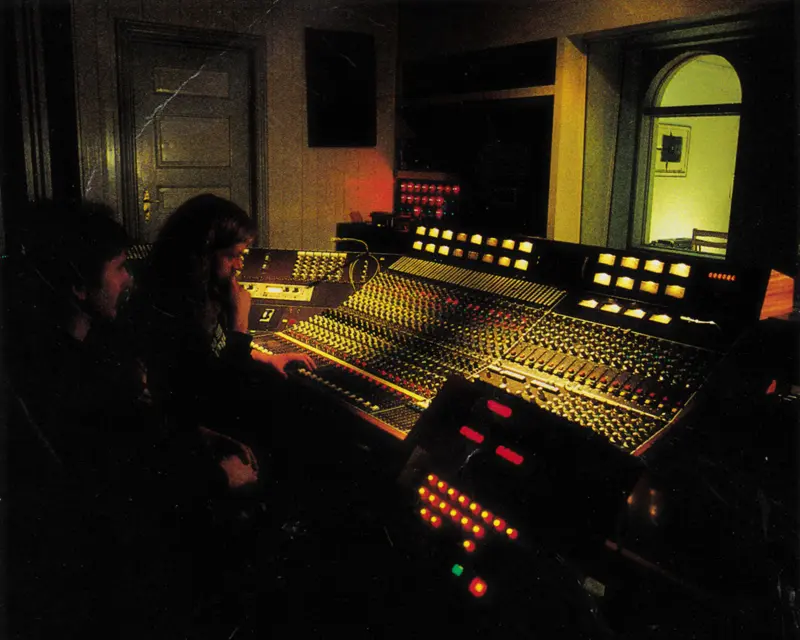
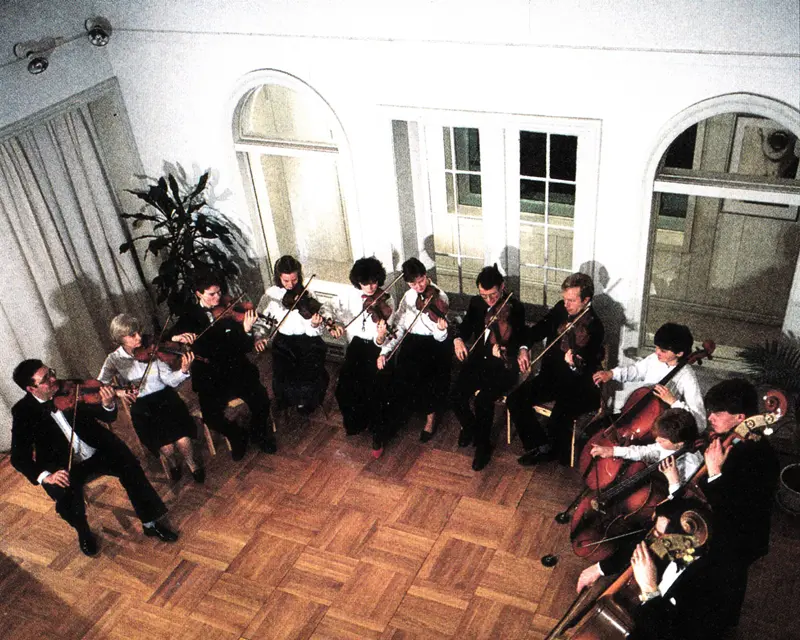
Everything culminated in the establishment of the studio Det Hvite Hus (“The White House”) in an old manor house in Porsgrunn. Legendary recording equipment was installed here: a Helios 32-channel mixer, MCI 24-track, Studer A80, AMS DMX 15-80S, AMS RMX 16, and Lexicon 960 and 200 reverbs — and not least the EMT 140 plate reverb. There was also a large collection of Neumann, AKG, Calrec and Sennheiser microphones.
Det Hvite Hus could also boast Norway’s largest grand piano — a Bösendorfer 285. Throughout these years, Welle Busk had his good friend, the legendary Nils B. Kvam, as his mentor. With an 8-meter ceiling height and exceptional acoustics, Det Hvite Hus became one of the finest studios ever built in Norway, and some of the country’s biggest artists recorded there.
Villa Busk
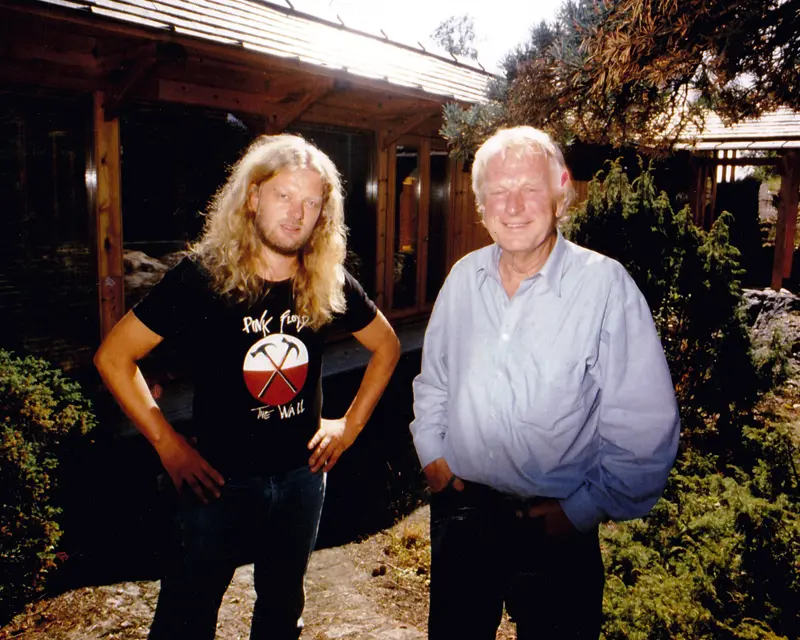
In the year 2000, Welle Busk moved his studio to his home Villa Busk, where the world-renowned architect Sverre Fehn had also designed a recording studio in the basement. Welle Busk stopped releasing records on his label Busk Records in 2015, but kept all the studio equipment that could fit into the smaller space.
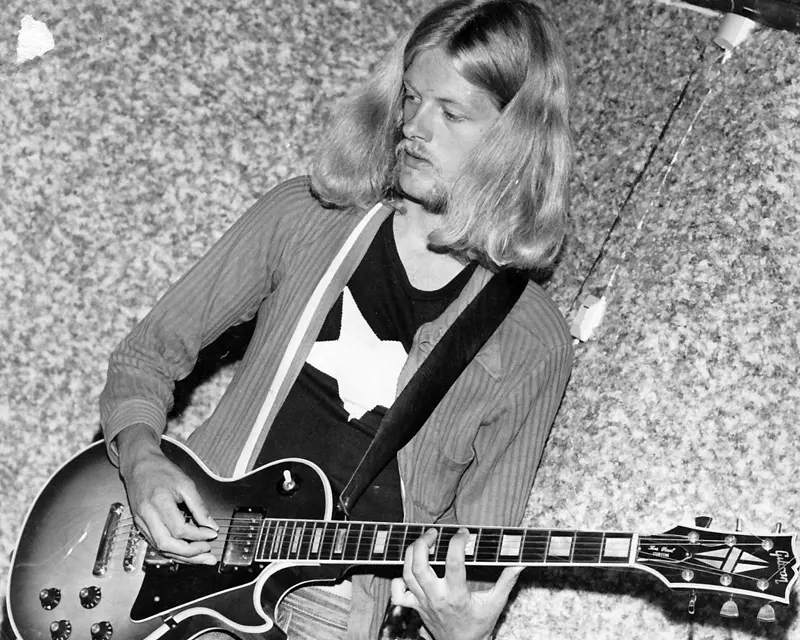
In the early 1970s, Welle Busk had composed a great deal of music that was never recorded. To be able to pay interest and installments on all the expensive recording equipment, he had to devote all his time and energy to making recordings for other musicians.But the compositions remained stored in Welle Busk’s mind for more than 40 years, and in 2018 he began recording 20 of the pieces he had composed between 1971 and 1977.
After eight years, 15 tracks are now completed. Welle Busk has worked in Kid Andersen’s studio in San Jose near San Francisco, adding “gospel-inspired” female backing vocals and Kid’s slide guitar on several tracks.
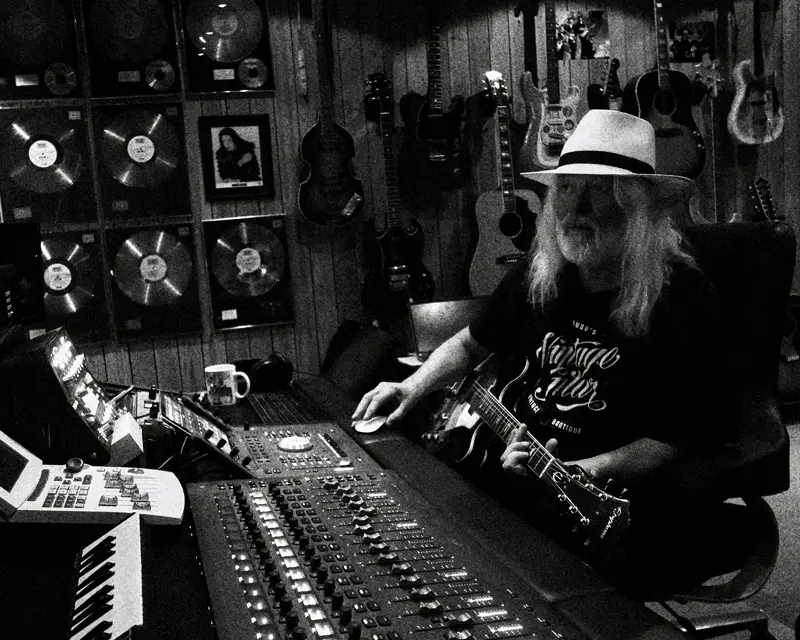
In February this year, the production was mastered by Sean Magee at Abbey Road in London, marking the end of an incredible 60-year journey that began for Welle Busk with Revolver…
What is unique about Electric Muzeum is that it is not music inspired by the 1960s and 1970s. It is music composed in the 1970s — but only now recorded, using equipment and instruments from that era.
«Historien om Terje Welle Busk, Busk Lydstudio og Electric Muzeum»
Terje Welle Busk var en av de mest suksessrike producere i Norge på 80- og 90-tallet med nærmere 2,5 millioner solgte MC/CD. Ikke dårlig da Norge i 1990 hadde 4,2 millioner innbyggere! Welle Busk sto selv for all markedsføring og distribusjon av sine innspillinger.
I 1966,14 år gammel, kjøpte Welle Busk «Revolver» og verden ble aldri den samme. I sitt første lokale pop orkester spilte de sanger av datidens idoler Beatles, Rolling Stones, The Who, Small Faces, Tremeloes, Kinks og mange andre. Inspirert av Beatles eksperimentering i studio drømte Welle Busk om å få sitt eget studio der han kunne arbeide med sine egne komposisjoner
Midt på 70-tallet startet han et av de første «kjellerstudioene» i Norge med en 4 spors TEAC A 3340. Kort tid etter ble det installert Soundcraft 16-8 mixer og TASCAM 80-8 og deretter TASCAM 90-16. Ettersom Welle Busk drev det eneste studio mellom Oslo og Kristiansand, ble det gjort opptak av alt fra folkemusikk, via gospelkor til heftige pønkorkestre.
Welle Busk startet sin orginale form for kassettkopering. Det begynte med 10 TEAC A103 seriekoblete kassettspillere og endte opp med 50 NAD 6050c og KING windere. Man kopierte fra MC, CD, spolebånd og DAT. Dette muliggjorde kassettkopiering i små opplag for kunder fra hele Norge.
hvite hus
Det hele toppet seg med etableringen av studioet «Det Hvite Hus» i en gammel herregård i Porsgrunn. Her ble legendarisk opptaksutstyr installert. Helios 32 kanal mixer, MCI 24-spor, Studer A 80, AMS DMX 15-80S, AMS RMX 16 og Lexicon 960 OG 200 klanger og ikke minst EMT 140 romklangsplate. Det var også en stor samling Neumann, AKG, Calrec og Sennheiser mikrofoner.
Det Hvite Hus kunne også skryte av å ha Norges største flygel, - en Bõsendorfer 285. Welle Busk hadde i alle disse årene sin gode venn, legendariske Nils B. Kvam, som sin mentor. 8 meter takhøyde og enestående akustiske forhold gjorde Det Hvite Hus til et av de beste studioene som har vært i Norge og noen av Norges største artister gjorde innspillinger i Det Hvite Hus.
Villa Busk
I år 2000 flyttet Welle Busk sitt lydstudio til sin bolig «Villa Busk» der den verdenskjente arkitekten Sverre Fehn også hadde tegnet lydstudio i underetasjen.
Welle Busk sluttet å utgi plater på sitt selskap Busk Records i 2015, men beholdt alt studioutstyret som det var plass til i de mindre lokalene.
Men komposisjonene var lagret i hodet til Welle Busk i mer enn 40 år, og i 2018 begynte han å spille inn 20 av komposisjonene han gjorde i perioden 1971 – 1977. Etter 8 år er nå 15 spor ferdige. Welle Busk har vært i Kid Andersens studio i San Jose ved San Fransisco og fått lagt på «gospelinspirert» damekor og Kid på slidegitar på noen spor.
I februar i år ble produksjonen mastret av Sean Magee i Abbey Road i London og markerte med det enden på en 60 års utrolig reise som for Welle Busk begynte med «Revolver» ………
Det unike med «Electric Muzeum» er at det ikke er musikk som er inspirert av 60- og 70-tallet. Det er musikk som ble komponert på 70-tallet, men som først nå er innspilt med utstyr og instrumenter fra den tiden.
CreditsCredits
Recorded and mixed at Villa Busk
Arranged and produced by Terje Welle Busk
Words and music by Terje Welle Busk
Recording engineers Stein Tore Sønsteli and Terje Welle Busk
Mixing engineer Stein Tore Sønsteli
Mastering and vinyl cutting at Abbey Road Studios London by Sean Magee
Slide guitar by Christopher “Kid” Andersen and harmony vocals by Lisa Leuchner Andersen,
Terry Odabi and Vicki Randle.
Recorded at Greaseland Studios San José, California
Recording engineer Christopher “Kid” Andersen
Musicians at Villa Busk Terje Welle Busk (acoustic guitars, electric guitars, bass guitars, percussion, lead and harmony vocals), Stein Tore Sønsteli (keyboards),Guttorm Guttormsen (flute and saxophone), Stig Sjøstrøm (percussion)
Cover art “The Cloud” by Odd Nerdrum, cover photographs by Jan Erik Fillan, cover design by Espen Gade (Enfinity AS)
Some of the instruments and recording equipment used on this Electric Muzeum album
2020 Fender Stratocaster “Rocky” GHR 117, 1965 Fender Stratocaster, 1974 Fender Stratocaster, 1976 Fender Precision, 2008 Fender Custom Shop Stratocaster “The Black Strat”,1964 Epiphone Casino E230TD, 2006 Epiphone Texan #67, 2008 Gibson C&W sc,
2015 Fender Telecaster Rosewood #144, 1963 Gibson J160E, 1969 Gibson SG Special,1974 Gibson Les Paul Custom 20th anniversary, 2006 Martin 000-28M #323, 1976 Guild F412, 1997 Rickenbacker 660 12 #853, 2001 Gibson SJ200, 1967 Höfner 500/1B, 974 Rickenbacker 4001, 1956 Neumann M49b, Neumann U87, AKG C 414 EB, AKG C 34, AMS RMX 16, AMS 15-80 S, Urei LA-4,
dbx 162, Lexicon 200, Lexicon 960, Lexicon PCM 80, Roland RE 501, 1966 Vox Tone bender Mk 1.5, 1967 Marshall Supa Fuzz, Klon centaur, Oberheim DX, Focusrite ISA 828, MXR 100 Script logo